Thursday, 2 August 2012

Indian Chaos - Reading Comprehension

Passage to read:


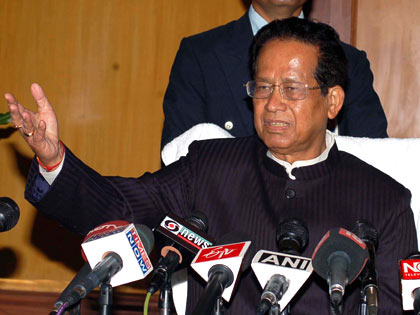
Delhi plunged into darkness and subsequent chaos since the wee hours of Monday following a disturbance in the Northern Grid that resulted in a blackout across eight northern States. Essential services like train, metro and water supply were affected due to the outage. A collection of images of the harrowed times Delhi residents went through several hours before power supply was restored.


Words to learn and use:

Plunged:



verb. to (cause someone or something to) move or fall suddenly and often a long way forward, down or into something.
example.
We ran down to the beach and plunged into the sea.
The car went out of control and plunged over the cliff.
Cook the peas by plunging them into boiling water
Niagara Falls plunges 55.5 meters.
The fall in demand caused share prices to plunge.
Our income has plunged dramatically. 

 Over there are the fish ponds, you'll have plenty of opportunity to catch a mess of trout, or brass, or even catfish. I'm a miser. I love to make things work. The ponds are in series, according to the nature of the fish. But the water starts working up in the mountains. It irrigates a score of mountain meadows before it makes the plunge and is clarified to crystal clearness in the next few rugged miles; and at the plunge from the highlands it generates half the power and all the lighting used on the ranch. Then it sub-irrigates lower levels, flows in here to the fish ponds, and runs out irrigates miles farther on.

Explanations from 'Wordnik.com'

verb. to thrust or throw forcefully into a substance or place.
example.
Plunge the lobsters, head first, into the large pot of rapidly boiling salted water. 


verb. to cast suddenly, violently or deeply into a given state or situation.
example. The street was plunged in cool shadow

verb. to fall or throw oneself into a substance or place.
example. we plunged into the icy mountain lake.

verb. to throw oneself earnestly or wholeheartedly into an activity or situation.
example. I plunged into my studies

verb. to enter or move headlong through something.
example. The hunting dogs plunged into the forest.

verb. to descend steeply, fall precipitously.
example. a cliff that plunges to the sea.

verb. to move forward and downward violently.
example. the rider plunged from the bucking horse.

verb. to become suddenly lower, decrease dramatically.
example. Stock prices plunged during the banking crisis.

verb. to speculate or gamble extravagantly.

noun. to act or an instance of plunging

noun. a place or area, such as a swimming pool, for diving or plunging.

noun. a swim, a dip.

_________________________________________________________________________________
Wee
adjective. small, little
example.
There's a wee cottage inside the grounds.
Would you care for a wee bit more to eat?

adjective. Very early,
example,
the wee hours of the morning

__________________________________________________________________________________
Harrowed
adjective. looking as if you have suffered
example. His face was harrowed.


Thursday, 26 July 2012

The Impact of Conversion Technologies - Reading Comprehension

Passage to read:

Contemporary users choosing a technology platform often run the risk of being stranded with a technology that becomes incompatible with a future dominant technology. The widely observed presence of network effects tends to exacerbate this consumer dilemma, as markets tend to “tip” towards a single, winner-take-all standard. This study seeks to show that such a dilemma can be solved in some circumstances for digital goods when conversion technologies are present.

Words to learn and use:

Contemporary
adj. existing now / happening now.
example, Contemporary music/literature/art/fashion

adj. belonging to the same period of time/age
example, a fact documented by two contemporary sources.

The Huffington Post: "In the world of competitive dance conventions and, more recently, shows like 'So You Think You Can Dance', the word 'contemporary' has morphed from a simple descriptor to its own unique and potentially limiting dance form" 

Read The Huffington's post from the url below:
www.huffingtonpost.com/nora-younkin/so-you-think-you-can-dance-culture_b_1084452.html
 
______________________________________________________


Stranded
adj. unable to leave somewhere because of a problem such as not having any transport or money
example, If the tide comes in, we'll be stranded on these rocks.


adj. abandoned or marooned, run aground on a shore or reef, cut-off or lefr behind


Voice of America: "Meanwhile, hundreds of supply trucks remain stranded at the closed Torkhum border crossing in the Khyber tribal region, leaving them vulnerable to attacks from Talibal insurgents"
______________________________________________________

Exacerbate
verb. to make something which is already bad worse.
example, This attack will exacerbate the already tense relations between the two communities.

verb. to increase the severity, violence, or bitterness of, aggravate
example, a speech that exacerbated racial tensions
example, a heavy rainfall that exacerbated the flood problems

Monday, 25 June 2012

Today's Word List - Learning

Abhor

means, To regard with horror or loathing, detest vehemently 

To hate a way of behaving or thinking, often because you think it is not moral 

Example Scenario:

“Nature abhors the old, and old age seems the only disease; all others run into this one.”  

  "He abhors cats"

  "Abhor the evil, hold on to what is good"

Abject

Brought low in condition or status.

Being of the most contemptible kind: abject cowardice.
Being of the most miserable kind; wretched; abject poverty.

Example Scenario:

"abject cowardice"

 "abject sorrow"


Abjure

Renounce upon oath,

To recant solemnly; renounce or repudiate 

To state publicly that you no longer agree with a belief or way of behaving.

Example Scenario:

"Our doors for peace talks with the ULFA are open, but then they have to abjure violence and give up the demand of sovereignty," the chief minister told journalists. 


Abrasive

 adj. Causing abrasion:
 adj. Harsh and rough in manner: an unpleasant, abrasive personality.
 n. A substance that abrades.

"Ana scratched the stove-top with an abrasive cleanser"

"Another type of personality disorder is the assertive or sadistic personality. They act abrasive and harsh around others and have an overall hostile attitude to them. They act in random outbursts and in an unexpected nature. They are daring and are drawn towards challenges, risks and harm. They are undeterred by things most people would be, such as pain, danger, or punishment. Instead, these risks draw then nearer. These types of people get satisfaction from intimidating or humiliating others. They are usually verbally abusive, and may be physically abusive and brutal as well. They are usually close-minded and extremely opinionated, and feel there beliefs are superior. They are also usually prejudice and like to hold themselves higher up than others. They are proud of their strength and their competitive assertiveness and like to show themselves as dominating and powerful. Sometimes they may be unaware of their own destructiveness. These type of people will do whatever it takes to get what and where they wand and are willing to do harm to get what they what they want."


Thursday, 21 June 2012

Today's Reading Comprehension - Quality of Dreams

Directions: Answer the question based on the following passage.

Sometimes, or should one say most of the times, there seems to be no logical reasoning for the events that take place in most people’s dreams although this statement also has to be taken with more than a large grain of salt. Over the period of centuries, since people started getting interested in analyzing dreams, everyone from Plato to Jung to Freud and many others have gone on and proposed theories about the meaning and import of dreams and dreaming. One often wonders if all the embroilment and the gaggle of voices is a tool to satisfy individual, super-size egos rather than satisfy the thirst for interpretation of a phenomenon that has puzzled, fascinated and baffled man since ages.

One school of thought goes with the idea of a conscious, a subconscious and an unconscious mind and feels that dreams are the bridges that connect these three parts of the human psyche. They feel that all that we dream is a sum result of all our desires - suppressed and expressed, our emotions overt and covert, and our experiences - good and the bad. This school feels that dreaming is an activity of the brain that exercises it when we sleep. Just as walking, running etc are physiological workouts, the sequence of dreams - remembered and forgotten - contributes an essential and vital input in the development of the muscles of our brain. This, being a kind of simplistic explanation perhaps, could not curry favor with the researchers looking for more esoteric explanations for the same ang that has spawned an entire industry that thrives on offering various, often discordant postulations for something that perhaps is very important - as worthwhile as it gets. Cases in point are the two explanations given by Burdach and Weygandt. While one asserts that dreams are a kind of a safety valve that take the mind away from the trials and tribulations of the present, the other view asserts that dreams are intimately and inextricably connected to our present state of affairs. Just as the former explanation finds it hard to give an irrefutable evidence for its correctness; the latter also flounders when put to the rack.

According to the passage, which of the following cannot be a quality of dreams?

1.  They epitomize various schools of interpretations.

2.  They are a form of psychical conditioning.

3.  They are a circumvention tool for the cognitive faculties.

4.  They provide the illusion of an elusion.

5.  They are a coupling for the overt and the covert.

Saturday, 16 June 2012

Paul Anka - Put Your Head On My Shoulder (1963 Version)

Lyrics:

Put your head on my shoulder
Hold me in your arms, baby
Squeeze me oh so tight
Show me that you love me too

Put your lips next to mine, dear
Won't you kiss me once, baby
Just a kiss goodnight, maybe
You and I will fall in love
(You and I will fall in love)

People say that love's a game
A game you just can't win
If there's a way
I'll find it someday
And then this fool with rush in

Put your head on my shoulder
Whisper in my ear, baby
Words I want to hear
Tell me, tell me that you love me too
(Tell me that you love me too)

Put your head on my shoulder
Whisper in my ear, baby
Words I want to hear, baby
Put your head on my shoulder

The Platters - Only You


Lyrics:

Only you
can make this world seem right
Only you
can make the darkness bright
Only you and you alone
can thrill me like you do
and fill my heart with love for only you

Only you
can make this change in me
For it's true
you are my destiny
When you hold my hand, I understand
the magic that you do
You're my dream come true
my one and only you, only you

Only you and you alone
can thrill me like you do
and fill my heart with love for only you

Only you
can make this change in me
For it's true
you are my destiny
When you hold my hand, i understand
the magic that you do do
You're my dream come true
my one my one my one and only you

Wednesday, 6 June 2012

Mario Lanza - The Donkey Serenade


There's a song in the air,
But the fair senorita
Doesn't seem to care
For the song in the air.
So I'll sing to the mule
If you're sure she won't think that I am just a fool
Serenading a mule.

Amigo mio, does she not have a dainty bray?
She listens carefully to each little word we play.
La bella senorita?
Si, si, mi muchachito,
She'd love to sing it too if only she knew the way.
But try as she may,
In her voice there's a flaw!
And all that the lady can say Is "e-e-aw!"
Senorita donkey sita, not so fleet as a mosquito,
But so sweet like my Chiquita,
You're the one for me.

There's a light in her eye,
Tho' she may try to hide it,
She cannot deny,
There's a light in her eye.
Oh! the charm of her smile
So beguiles all who see her
That they'd ride a mile
For the charm of her smile.

Amigo mio, is she listenin' to my song?
No, no, mi muchachito, how could you be so wrong?
La bella senorita?
Si, si, la senorita,
She loves to sing it to me
If only she knew all the words,

Her face is a dream
Like an angel I saw!
But all that my darlin' can scream
Is: "e-e-aw!"
Senorita donkey sita, not so fleet as a mosquito,
But so sweet like my Chiquita,
You're the one for me.

Sunday, 27 May 2012

Ferris Bueller's Day Off (1986) - Movie Watch

Ferris is a street-wise kid who knows all the tricks. Today he decides to take the day off school. When Ferris takes the day off, so must his best friends, Cameron and Sloane. Cameron is reluctantly persuaded to borrow his father's Ferrari, and together they hatch a plan to get Sloane out of class. Suspicious dean of students Ed Rooney knows all about Ferris, but can never catch him. Ferris' sister Jeanie is also frustrated that Ferris always gets away with his tricks and she doesn't. Furthermore, Ferris is an 'angel' in his parents eyes. It's Ferris' day off, he's out to enjoy himself, and he does!.


Movie Snapshots


Sunday, 1 April 2012

Today's Word List


Anarchy (noun):
Means, a situation in which there is no organization and control, especially in society because there is no effective government.
Example,

  • What we are witnessing is the country's slow slide into anarchy.
  • The country has been in a state of anarchy since the inconclusive election.
  • If the pay deal isn't settled amicably there'll be anarchy in the factories.

Trepidation (noun):
Means, fear or worry about what is going to happen.
Example, We view future developments with some trepidation.


Al Wilson - Show and Tell


These are the eyes that never knew how to smile
Till you came into my life (do-do-do-do-do)
And these are the arms
That long to lock you inside every day
And every night (do-do-do-do-do)
Girl, and here is the soul of which you've taken control
Can'tcha see I'm tryin' to show love is right
Whoa, oh, oh, oh show and tell
Just a game I play
When I wanna say "I love you"
Girl, so show me and tell me
That you feel the same way too
Say you do, baby
These are the hands
That can't help reaching for you
If you're anywhere in sight
(Anywhere in sight)
And these are the lips
That can't help callin' your name
In the middle of the night
(Middle of the night)
Whoa, and here is the man
Who needs to know where you stand
Dontcha know I've done all I can, so decide
Whoa, oh, oh, oh show and tell
Just a game I play
When I wanna say "I love you" (I love you)
Girl, so show me and tell me
That you feel the same way too
Say you do, say you do, baby, baby, baby
Ahh, here is the soul
Of which you've taken control
Can't you see I'm tryin' to show love is right
Ooh, girl, show and tell
Just a game I play
When I wanna say "Oh, I love you"
Girl, so show me and tell me
That you feel the same way too
Say you do, say you do, baby
Whoa, oh, oh, oh show and tell
Just a game I play
When I wanna say "Oh, I love you"
Girl, so show me and tell me
That you feel the same way too
Say you do, baby, baby

Today's Word List - The Paintings of Carl Rakeman

Picture - 1 Turnpike Gates

There might be someone outside your window
But you'll just, never know
There could be something right past the turnpike gates
But you'll just, never know

Turnpike (noun-US): a motorway which you usually have to pay to use.

Picture - 2 Doctor and Circuit Rider


According to the fourth U.S. Census, the population in1820 numbered more than 9.6 million. Most of this number lived an agricultural existence, often far from civilization. When medical help was needed, it was usually hours or days before a neighbor could summon the overworked country doctor. Regardless of the weather, the physician would harness his horse and chaise and struggle over poor trails.

This painting shows a physician accompanied by a circuit rider, often known as "the prophet of the long road." Francis Asbury was one such man. While the physician tended to the sick, the circuit rider gave spiritual solace to families in distress. The progress of both the doctor and circuit rider was slowed by bad roads and stream crossings.


Summon (verb) : to order someone to come to or be present at a particular place, or to officially arrange a meeting of people.
Harness (noun) :a piece of equipment, with straps and belts, used to control or hold in place a person, animal or object.
Chaise: a light open horse-drawn carriage.
Circuit rider: Circuit rider is a popular term referring to clergy in the earliest years of the United States who were assigned to travel around specific geographic territories to minister to settlers and organize congregations.
Solance (noun): help and comfort when you are feeling sad or worried.

Saturday, 31 March 2012

Today's Word List

Hiatus (noun):
Means, a short pause in which nothing happens or is said, or a space where something is missing.
Examples,
  • The company expects to resume production of the vehicle again after two-month hiatus.
  • I'm taking a little hiatus from blogging.
  • Hiatuses of thought


insatiable (adj) (/ɪnˈseɪ.ʃə.bl ̩/):
Means, (especially of a desire or need) too great to be satisfied
  • Like so many politicians, he had an insatiable appetite/desire/hunger for power.
  • Nothing, it seemed, would satisfy his insatiable curiosity.
Look COD
    Spree (noun):
    Means, a short period of doing a particular, usually enjoyable, activity much more than usual.
    Example:
    • I went on a drinking spree on Saturday
    • Twenty people were shot dead in the city making it the worst killing spree since the riots.

    Wednesday, 28 March 2012

    WINCKELMANN: THE BIRTH OF A SCIENCE

    
    Johann Joachim Winckelmann
    A famous sketch of J.J. Winckelmann made in Rome, in 1764, shows him sitting over an open book, quill in hand. Huge, dark eyes shine out from under an intellectual brow. The nose in large, almost a Bourbon nose in this portrayal. The mouth and chin are soft and rounded. Altogether the drawing suggests an artistic rather than an academic personality. Winckelmann, a cobbler's son, was born in 1717 in Stendal, a small town in Prussia. As a boy he tramped the countryside looking for the pre-historic barrows of the district and lured his comrades into helping him dig for old urns. By 1743 he had made himseld senior assistant master of a grammar school in Seehausen.

    In 1748 he found a post as librarian for the Count of Bunau, near Dresden, in Saxony, and left the Prussia of Fredrick the Great without regreat. He had early realized that Prussia was a "despotic land", and in later life he looked back on the years spent there with a shudder, remarking that "I at least felt the slavery more than others".

    The future course of his life was determined by this move. He landed in the midst of a circle of important artists, and in Dresden founded the most comprehensive collection of antiquities then extant in his native Germany. The opportunity to study these relics put out of his thoughts half-serious plans to go abroad, perhaps to Egypt. When his first writings appeared, they evoked echoes throughout all Europe. In order to get a chance to work in Italy, he turned Catholic, but with the passage of the years he became, if anything, more spiritually independent than before his conversation, and in religion he never dogmatic. Rome, he thought, was worth a Mass to him.

    In 1758 he became the librarian of Cardinal Albani's collection of antiquities. And in 1763 he was appointed Cheif Supervisor of all antiquities in and about Rome, and in this capacity he visited Pompeii and Herculaneum. In 1768 he was murdered.

    Three of Winckelmann's voluminous works contributed basically to the introduction of scientific methods in the investigation of past. These are his Sendschreiben, or Open Letters, on the discoveries of Herculaneum; his main work, History of Art of Antiquity; and his Monumenti antichi inediti, or Unpublished Relics of Antiquity.

    Excavations at Pompeii and Herculaneum during the early years were haphazard. But worse than planlessness was secrecy. An atmosphere of exclusivenss was generated by prohibition imposed by self-seeking rulers on all foreigners, whether mere travelers or students of the past, who sought permission to visit the two dead cities  and tell the world about them. The only exceptions made by the king of Two Sicilies had been to allow a bookworm by the name of Bayardi to perpare catalogue of the finds. But Bayardi plunged into an introduction to his catalogue without even bothering to visit the excavations. He wrote and wrote, and by 1752 had completed five volumes, totaling some 2677 pages, without getting to the essentials. Meanwhile he spread malicious reports about two newcomers who showed signs of going straight to the heart of the matter, and was able to have them denied permission to visit the site.

    And whem a bonafide scholar managed to get hold of one or another excavated piece to inspect at first hand, as often as not total lack of preparation would lure him into such devious theories as one advanced by Martorelli. This Italian savant wrote a two-volume work running to 625 pages in order to prove, by inspection of an inkwell, that the ancients did not use scrolls, but regular books of rectangular shape. And this when the papyrus rolls of Philodemus stared him in the face.

    The first large folio volume on the antiquities of Pompeii and Herculaneum finally appeared in 1757, written by Valetta, and subsidized by the King to the extent of twelve thousand ducats. Meanwhile Winckelmann entered this atmosphere of envy, intrigue and moldy bookishness.

    THE QUEEN OF NAPLES: FROM HER GARDEN

    Maria Amalia Christine, the lively young Queen, who was of artistic bent, explored the spacious precincts of her palace gardens and discovered there a wealth of statuary and other carved works. Delighted by the beauty of these antiquities, she begged her royal husband to let her look for new pieces. The king gave in because Vesuvius had been quite for a year and a half since the great outbreak of May 1737. A Spaniard organized a labor force and equipped it with tools and blasting powder.

    The difficulties were formidable, for at the outset the diggers had to penetrate 49.5 feet of stony-hard lava deposit. Working outward from a well-shaft discoverd by d'Elboeuf, the crew cut passages and bored blast-holes. At last the men's picks struck on metal making it ring like a bell. The first find consisted of three fragments of bronze equestrian statues sculptured on heroic scale.

    Finally, an expert was brought into the enterprise Marchese, to supervise and to handle the disposition of further discoveries. Three marble sculptures of Roman figures in togas, some painted columns, and broze torso of a horse were next unearthed. Marchese had himself lowered down the shaft on a rope, and discovered a flight of stairs. Its construction gave him some clue of what sort of edifice it was into which they were tunneling. Several weeks later, on December 11, 1738, an inscription was found indicating that a certain Rufus had built, with money of his own, the "Theatrum Herculanense".

    It now appeared that a buried city had been revealed, for almost certainly a theater could only have been in an inhabited place. By luck, it seemed d'Elboeuf, the first excavator, had struck the very middle of the stage. This stage was littered with statuary. It was the one spot on the whole site where it was possible to find sculpture piled up literally one piece on top of another. The enormous stream of lava had rolled against the back wall of the theater, which had been richly decorated with carved works, and toppled it down upon the stage. For seventeen hundred years the stone figures had lain undisturbed.

    The inscription gave the name of the city as "Herculaneum".
    Lava, a liquidly flowing stone, is a mixture of several kinds of minerals, which hardens as it cools into glass and new kinds of rock. Herculaneum was covered to a depth of 65 feet by this material.


    Lapilli, on the other hand, consist of small fragments of glassy volvanic rock. When spewed out of a volcanic togather with greasy ashes, these little stones descend as a relatively light rain, and form a loose cover not too resistant to light tools. Pompeii lay under a blanket of this kind and, moreover, was not nearly so deeply buired as its sister city, Herculaneum.


    In history, as in the life of the individual, it often happens that the difficult course is chosen in preference to the easier one, and the longest way mistaken for the shortest. Thirty-five years passed after d'Elboeuf's inital efforts at Herculaneum before the first space-cut was made which ultimately led to uncovering of Pompeii.

    Pictures of Herculaneum:


    Tuesday, 27 March 2012

    Today's Word List

    Conjectural (verb):
    Means, to guess, based on the appearance of a situation and not on proof
    Examples,
    • We'll never know exactly how she died; we can only conjecture.
    • The inhabitation of Britan by hominids during the last one-half million years in unquestionable, but because all of the pre-Roman inhabitants of current-day Britain had no written languate, any insights and speculations are purely conjectural and are open to debate.
    Look COD

    Sporadic (adj):
    Means, happening sometimes; not regular or continuous/ Occurring at irregular intervals; having no pattern or order in time / Appearing singly or at widely scattered localities, as a plant or disease.
    Examples,
    • During the Paleolithic period the permanent settlements were sporadic, at best, due to the constantly changing environment and brutal living conditions.
    • The sound of sporadic shooting could still be heard.
    Look TFD

    Ensuing (adj):Means, happening after something and because of it
    • An argument broke out and in the ensuing fight, a gun went off
    • He lost his job and in the ensuing months became more and more depressed

    Top-9 GRE Books to start preparation

    Science Fiction Writers

    Monday, 26 March 2012

    British Islands

    The Era of Computing Technologies


    __________
    Candid:
    honest and telling the truth, especially about something difficult or painful
    Look CDO
    __________
    Verisimilar (adj):
    Appearing to be true or real; probable.
    Look TFD
    __________

    Usher (Verb)
    to show someone where they should go, or to make someone go where you want them to go
    Look COD
    __________
    averse (adj)
    strongly disliking or opposed to
    Look COD
    __________
    sequestered
    describes a place that is peaceful because it is situated away from people
    Look COD
    __________